Style Hub
LaunchedDeprecated"Style by Alexa" — the platform inside the Amazon Shopping app that unified every fashion feature behind one card feed, one card schema, and one deep link router.
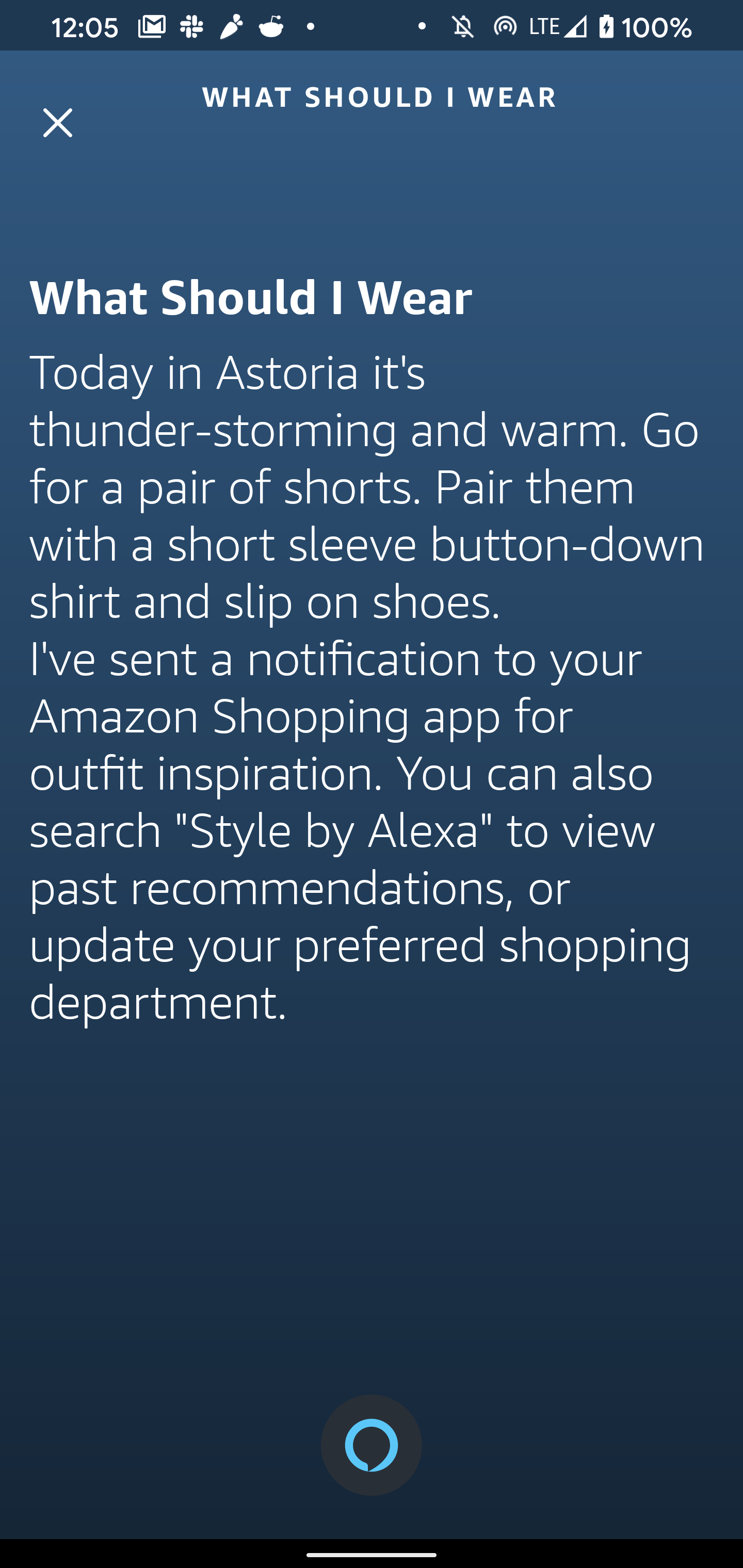
By 2019 Amazon's fashion features were scattered. Outfit Compare sat on its own under Programs and Features in the Amazon Shopping app, and "Alexa, what should I wear?" and "How do I look?" were both about to launch and needed somewhere of their own to live. Each new feature meant another entry in a menu that was already crowded, and none of those features could discover each other.
Style Hub, whose customer-facing name was Style by Alexa, was the answer to that, and it was one destination that served as the common platform for every style feature, present and future. It would simplify the menu, and make launching a new style feature cheap, and give marketing an easily updated set of ingress cards, and let the features cross-promote each other.
I designed and built V1, and designed V2 alongside our product lead.
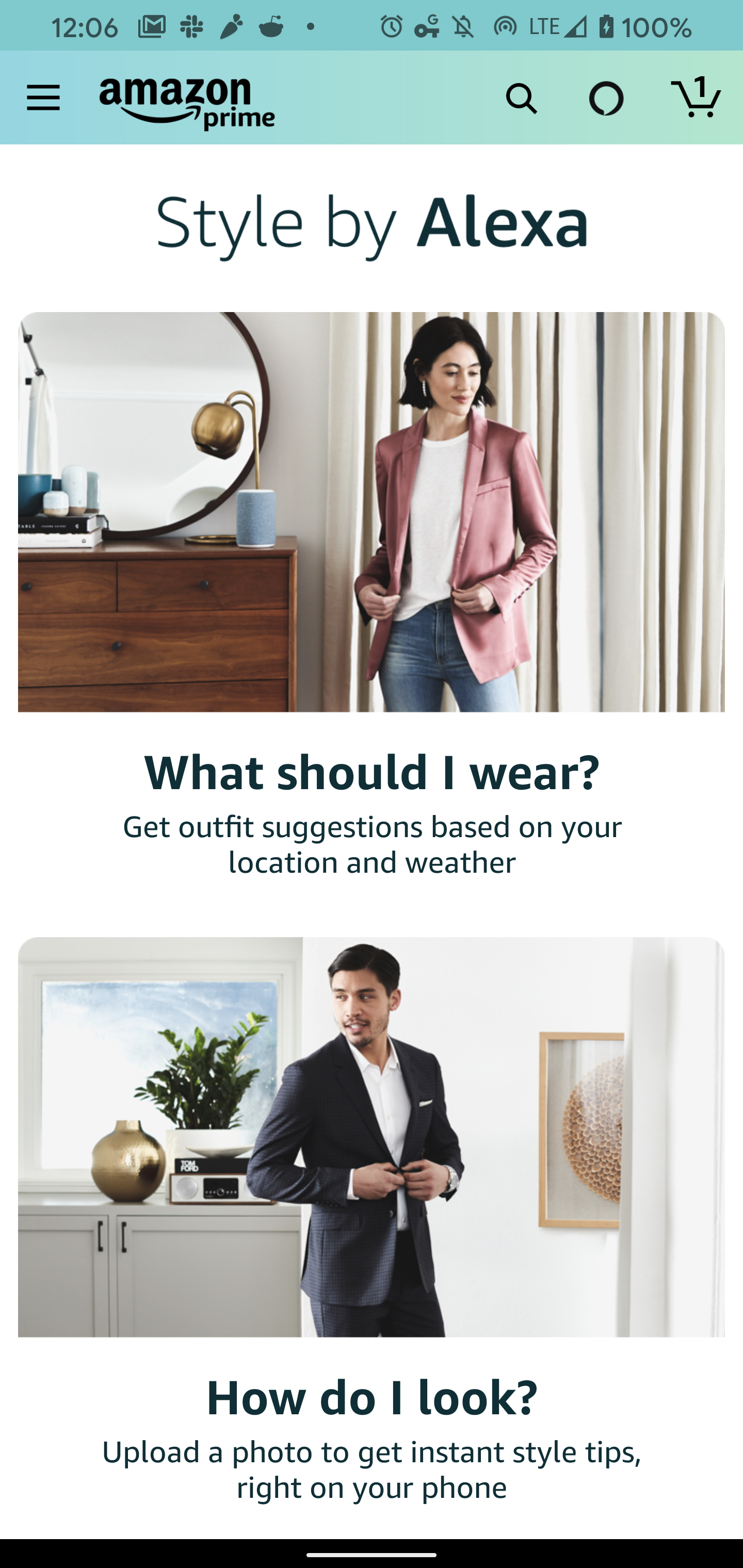

What it actually is
Three pieces, all small:
- A card template schema, built on JSON Schema, so that a card could be defined once and then validated on the server when it was written and on the client when it was consumed, which is one shared definition with 2 enforcement points on it.
- An extensible card rendering feed, driven by a prebuilt JSON feed definition stored in S3, so that the contents of Style by Alexa could change without an app release, and without a service sitting in the request path.
- A deep link router with a feature registry on it, processing every incoming deep link and passing the web links and the deep links through to whichever feature owned them.
V2 added integration with Amazon's content management system so the feed definition file could be updated programmatically rather than by hand.
The goal throughout was a most-lovable-product launch that was built fast, with minimal engineering, and, critically, with low operational load. A JSON file in S3 rather than a service is the entire thesis of the design.
Launching it
Style Hub was built under severe constraints, because it ran concurrently with an infrastructure migration that was mandated to complete by year end, and with Virtual Closet taking priority for people, and through repeated project leadership transitions. There was no TPM and there was no consistent PM, and so I handled all of the partner-team onboarding and communication as well as all of V1's development.
And it was a lynchpin. "What should I wear?" and "How do I look?" were both launching into Style Hub, and so if Style Hub slipped then both of them slipped with it. It also required moving Outfit Compare out from directly under Programs and Features so that it lived under Style by Alexa instead, and that meant designing a weblab strategy that could relocate a shipped and live feature without breaking it for anyone mid-flight.
It launched on time and without incident, simultaneously with "What should I wear?", even though the final designs and the final copy arrived only 5 days before the production launch.
Beyond the launch
Style Hub set the build, linting, and unit testing standards for the React Native features the team subsequently shipped into the Shopping app, and introduced JSON Schema as the team's approach to templated JSON: shared definition, server-side generation and validation, client-side validation and consumption.
To spread the platform knowledge rather than hoard it, I gave a brown bag talk on the nuances of React Native development inside the Shopping app, and wrote up feature development and testing instructions for the team.
Amazon later folded Style by Alexa's capabilities more broadly into the Shopping app and Alexa devices as the Echo Look device was wound down.