
Supply The Pulpit
DeprecatedA two-sided marketplace matching churches that needed a guest preacher with preachers available to fill a pulpit — and a national directory of both.
Every church has the same recurring problem: the regular preacher is away, and somebody has to fill the pulpit on Sunday. Solving it is a phone-tree exercise built on whoever the pastor happens to know. Meanwhile there is a supply of people who preach well and would happily do it, with no way to be found.
Supply The Pulpit was the marketplace between them — "your first stop for pulpit supply" on one side, "join the national database of pulpit supply preachers" on the other.

 Churches
 Preachers
The product
A speaker profile carried what a church actually needs to make the call: where you are, what you speak on, what you cost, and a way to reach you.
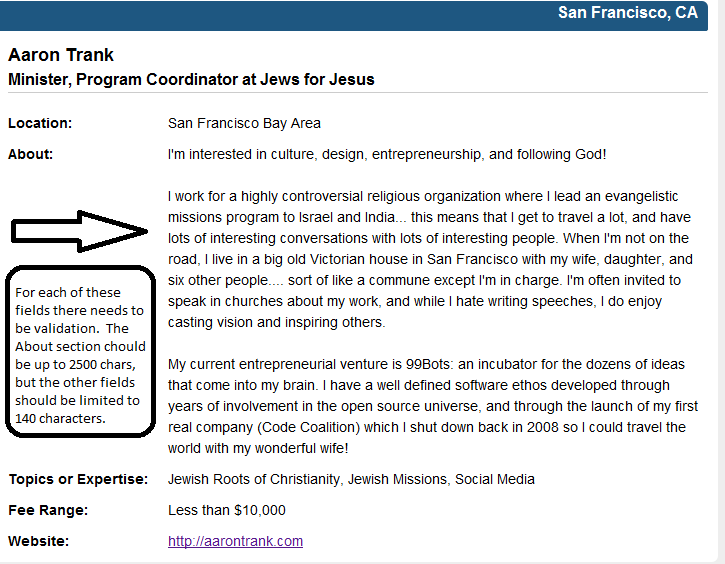
That screenshot is the artifact I like most out of this whole era. It is not a mockup — it is the working site, running at test.supplythepulpit.com, screenshotted and then drawn on to specify what still needed building. The callout reads:
For each of these fields there needs to be validation. The About section should be up to 2500 chars, but the other fields should be limited to 140 characters.
Which is why, in the database schema, headline, location, topics, websites, and feerange are all varchar(140). The spec and the schema are the same decision written twice, and both survive.
Alongside the app sat a WordPress blog, because a directory nobody can find is not a directory — the content was how churches were meant to arrive.
One backend, two products
Supply The Pulpit ran on the same hand-rolled PHP backend as Messianic Fellowships, built the same year. The two products look nothing alike and are structurally the same thing: a profile, a search over profiles, and a way to make contact. Building one set of plumbing for both was the obvious move once I saw it.