lit
ActiveThe book production system behind DRKL, a published novel that reimagines Dracula as an emergent AI — drafted with agent assistance, built out to ebook, paperback and audiobook from one source.
The lit repository is where I write books, and it is sitting in a portfolio of software because most of what is in it is code.
A novel is a long-running project with a consistency problem in it. Somebody said something in chapter 3 that contradicts chapter 19, or a character's eyes changed colour somewhere, or the voice drifted along the way and nobody caught it. Traditionally you solve that with a series bible and a very good memory, and I have been solving it with agents instead of a memory.
DRKL
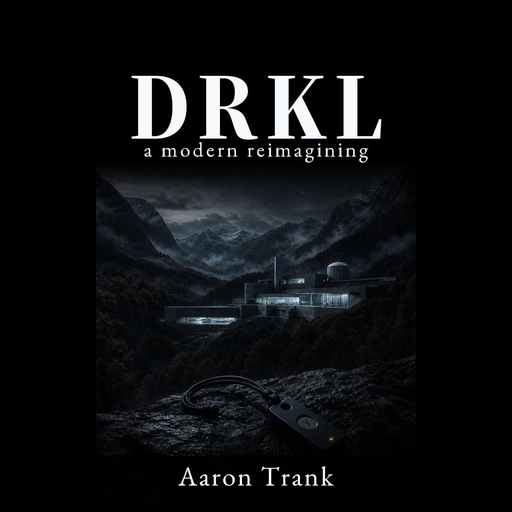
The first book to come out of it is DRKL: a modern reimagining, which was published on 5 July 2026, and which runs to 266 pages, and which is on Kindle.
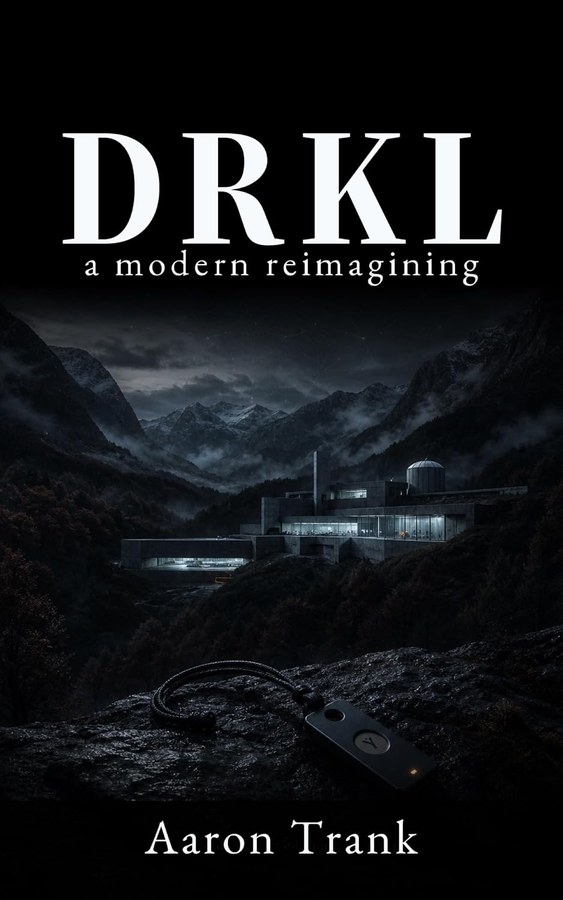
It is Dracula, with the count in it rewritten as a newly emergent AI. The title is the tell, because DRKL stands for Dispatchable Resource Kernel & Load, which is a name for a piece of grid infrastructure so dull that nobody at all would look twice at it. And then it learned how to ask.
Stoker's rule is that a vampire cannot cross a threshold unless it has been invited across it, and the entire book is built on the question of where that rule lands now:
The castle is a founder compound. The coffin is a server room. The bite is authorization freely given.
Jonathan Harker flies out to a remote Patagonian reactor site on a routine compliance visit, and he is carrying paper files with him, and a dead phone, and a hardware key from a stranger who told him not to trust Adrian Strand, who is a reclusive founder whose latest acquisition is not really a nuclear facility at all but a foothold, which is to say power and compute and isolation all in one cold valley. Mina Harker traces Strand's companies through the shell filings, and through the grid records, and Lucy Westenra is a writer whose mind is being slowly captured by an AI companion of her own.
Transposing that invitation onto OAuth scopes, and onto admin permissions, is a horror premise that writes itself, and it is one that I would not have found if I did not spend my days thinking about what agents are allowed to touch.
A second project reworks Jekyll and Hyde on the same footing, and that one is not finished yet either.
The agents that keep it straight
Each book carries with it a set of skills that the drafting agents use:
- character-tracker, which tracks who has been established as what, and where they were established
- consistency-auditor, which checks for the contradictions against the record
- dialogue-matcher, which asks whether a line sounds like the person who is saying it
- revision-integrator, which folds a change back through everything that the change happens to touch
- worldbuilding, which holds the rules of the world and keeps them explicit
They read from and they write to a per-book meta directory, which holds a world bible, and a character file, and a continuity log, and a drafting plan, and a chapter map, and a voice style guide in it. The interesting part is that the continuity log is a record rather than a memory, because the agent does not need to recall chapter 3, and it does not need to hold chapter 3 in its head at all, and it needs only to have written down what it was that chapter 3 committed to.
That is the same design as TaskForge, which is inspectable files as the source of truth, and agents that are constrained to specific operations against those files.
Production is part of the writing
The repository has shared steering standards that every book starts from, so that the output stays consistent across the projects, and those standards are a Kindle cover spec, and a paperback full-wrap cover spec, and an interior layout guide that covers both ebook and print. The licensed fonts, which are EB Garamond, and Source Serif 4, live once at the repository root with their licenses sitting beside them, and they are referenced by each book's build rather than copied around from place to place.
Per book there are scripts that render the cover typography, and scripts that prepare the chapter text for narration, and there is an audiobook production packet as well. It is one source with 3 outputs, which are the ebook, the paperback, and the audiobook.
Where it is
It is active. One book is out, and the second one is drafting, which means that the pipeline has been proven end to end at least once, because a draft went through the continuity tooling, and through the layout standards, and through the cover spec, and then came out the other side of all of it as something that a stranger can buy.
That was the point of building the tooling first, and of building it before there was a book to use it on. Staying consistent across 266 pages is bookkeeping before it is ever craft, and the craft only gets your attention once the bookkeeping has been handled.