Crews & Fan Groups
LaunchedGroup listening for music — always-on shared playlists and community conversation. Prototyped as Amp's second act, then built into the Amazon Music app.
Amp proved something its own product thesis hadn't predicted. The app was built so anyone could host a live radio show — but what actually formed on it were communities. People convened around genres, around specific artists, around shared listening occasions. They ran marathon shows together, co-hosted, flooded the chat, and organized meetups in person.
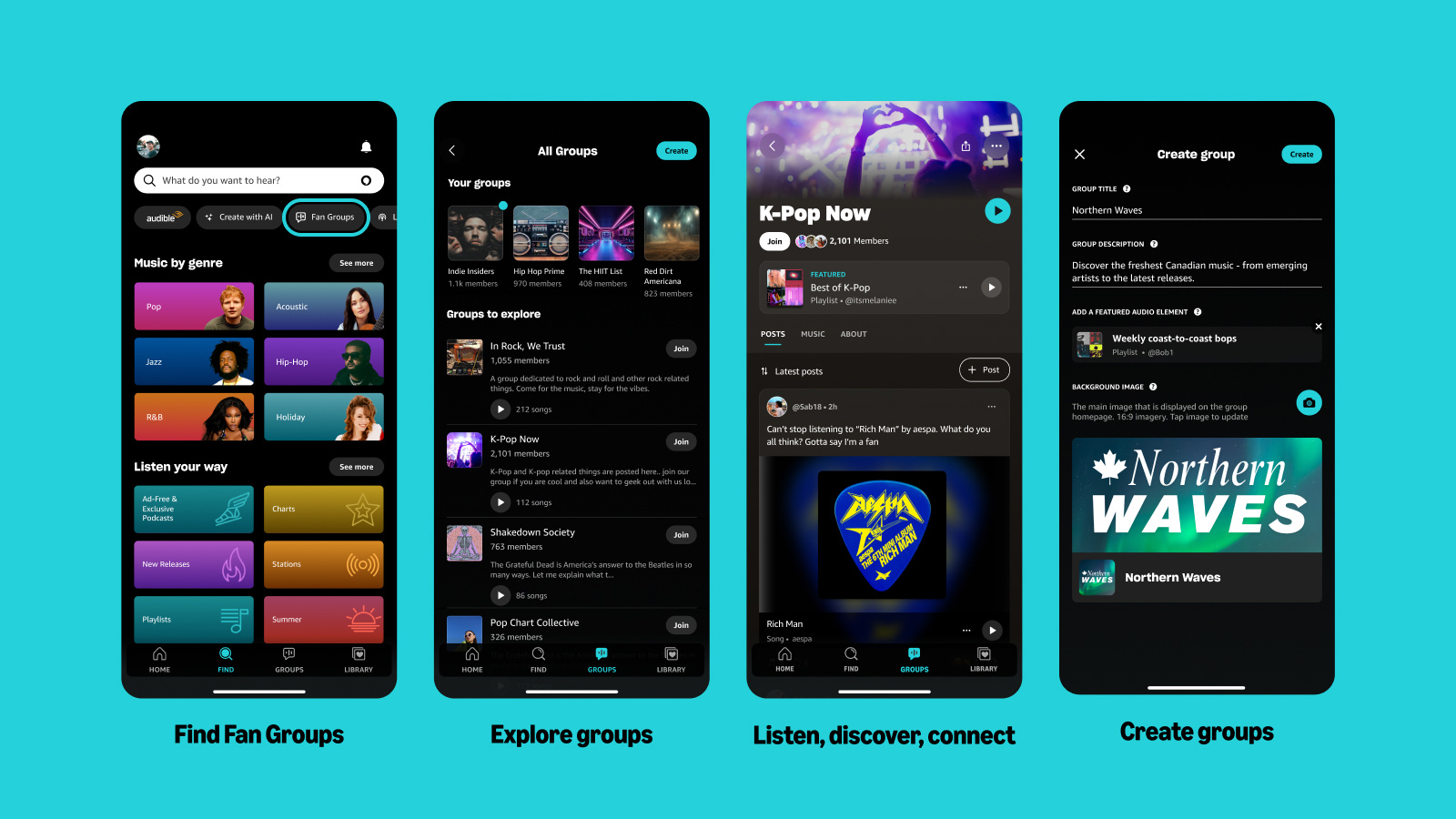
The obvious question was what the product would look like if the community, rather than the broadcast, were the thing at the center. That question was Crews: groups of people who listen to, share, and talk about music together, built around an always-on shared playlist that members suggest and vote on, with the option for someone to take the microphone and go live for a while before the playlist resumes.
Prototyping the idea
Amp shut down in October 2023, but the underlying insight didn't. I worked on the feature prototyping for it — the flows, the message board, and the wireframes for how an always-on group playlist, an activity feed, and intermittent live sessions fit together in one space, including the hard part: what a group is when nobody is live in it, which is most of the time.
The distinctive design problem is that a group has two clocks. The playlist runs continuously, and the conversation runs asynchronously — so the feed has to thread commentary against specific songs, members, and past live sessions, rather than being a chat log that scrolls away. That asynchronous, forum-shaped conversation is the part that separates it from real-time co-listening features elsewhere in the industry.
Building it in Amazon Music
The work then moved into the Amazon Music app itself, as Fan Groups. This was production engineering in a large cross-platform codebase — React Native shared across mobile and TV targets, Amazon Music's Bauhaus design system, and a GraphQL data layer with generated types.
I worked across the group surfaces and the music surfaces they depend on:
- Group list and group detail pages, and the navigation model connecting the list, a group, its members, its posts, and the create and edit flows for both groups and posts
- The GraphQL layer for group detail — the group, its membership counts, and its message feed with sorting and filtering
- Playlist and track list work, including playlist detail with paginated tracks and per-track library state, and the track and suggestion list items with their accessibility labels and hints, overflow menus, add-to-playlist and library actions
- Sharing — the flows for sharing a group and sharing a post out of the app
- Integration test infrastructure for the feature
A lot of that time went into the details that decide whether a social feature feels finished: how a track row behaves when the title overflows, how a suggestion reads to a screen reader, what the group map looks like when someone arrives from a share link without being signed in.
Amazon Music launched Fan Groups in beta in Canada in late 2025 — dedicated spaces where listeners discover, share, chat about, and stream music together without leaving the app, with a U.S. and global rollout to follow.